





Dual Diagnosis Treatment for Veterans and First Responders
Two clinicians. One integrated care plan.
Most warriors struggling with addiction are also dealing with PTSD, depression, anxiety, or trauma. These conditions don’t exist separately. They feed into each other. Treating one without addressing the other rarely leads to lasting recovery.
At Warriors Heart, dual diagnosis treatment means you work with two licensed clinicians who collaborate on your care. One focuses on addiction. One focuses on mental health. Both work together to address root causes, not just symptoms.
This is a primary substance abuse treatment center with specialized dual diagnosis care for warriors.
You do not have to keep fighting this alone. Confidential support is available 24/7.
How Dual Diagnosis Works at Warriors Heart
Two Licensed Clinicians Working Together

Addiction Clinician
Focuses on substance use treatment, addressing dependency, triggers, and building recovery tools.
Mental Health Clinician
Addresses depression, trauma, anxiety, and other psychological conditions driving or worsening substance use.
Both clinicians collaborate on your care plan, ensuring treatment addresses the root causes, not just the symptoms. This integrated approach is what makes dual diagnosis treatment effective.
Treatment includes:
- Individual therapy with both clinicians
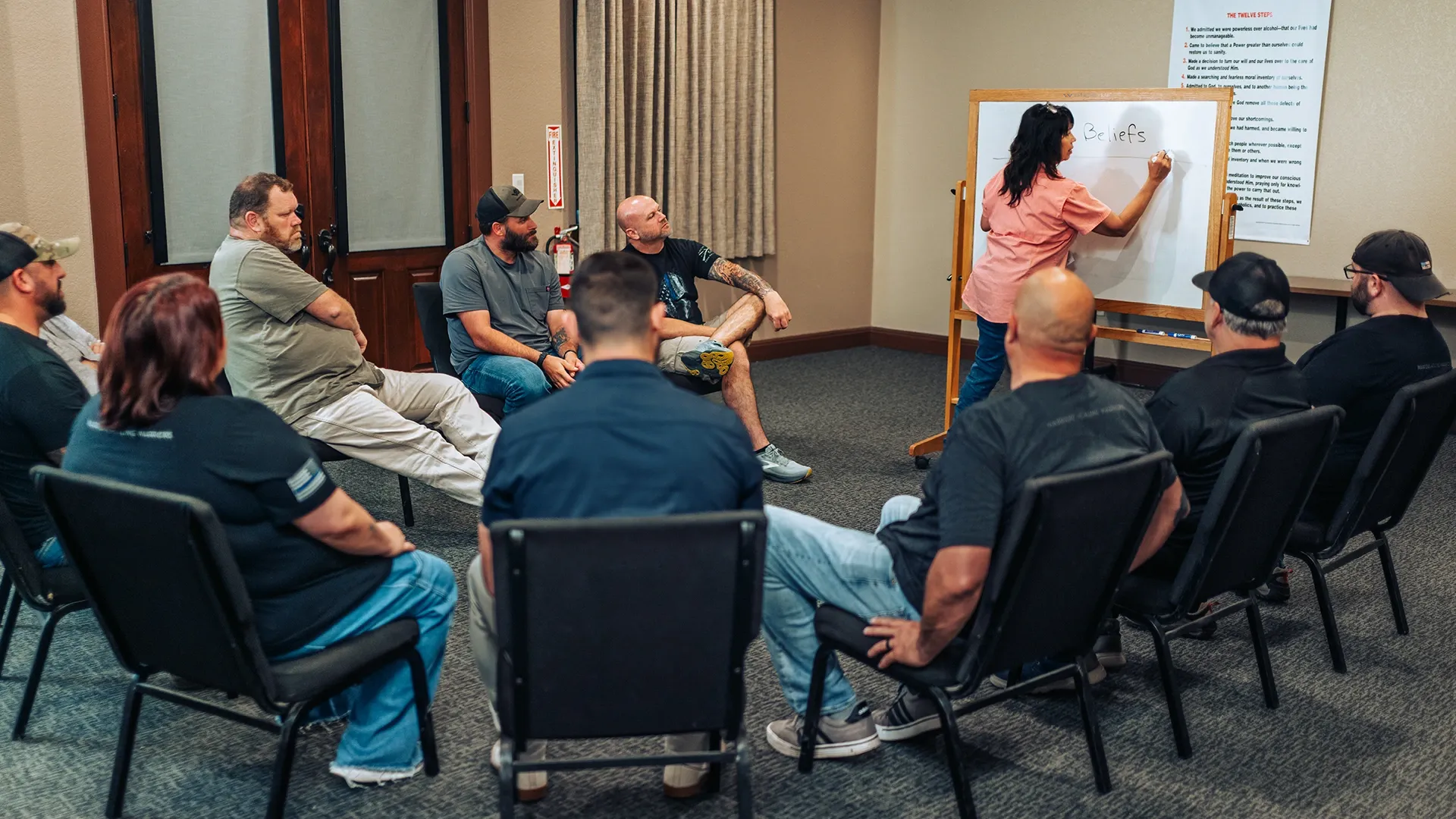
- Integrated group therapy with warrior peers
- Trauma-informed modalities: CBT, EMDR, and ART
- Medication management when clinically appropriate
- Experiential therapies that support both addiction recovery and mental health healing
Conditions We Treat
Substance use and mental health conditions are connected. Warriors use alcohol or drugs to numb PTSD symptoms, manage chronic pain, escape depression, or cope with anxiety. Treating one without the other leaves warriors vulnerable to relapse.
Substance Abuse Disorders
- Alcohol addiction
- Drug addiction (opioids, stimulants, benzodiazepines)
- Prescription medication dependence
Co-Occurring Mental Health Conditions
- PTSD – Trauma symptoms that drive substance use as a way to cope
- Depression – Using substances to escape hopelessness, loss of purpose, or isolation
- Anxiety – Alcohol or drugs used to manage panic attacks or social anxiety
- Chronic pain – Opioids prescribed for service-related injuries that develop into dependence
- TBI – Brain injuries that contribute to mood changes and difficulty regulating emotions
- Insomnia – Sleep medications or alcohol used to manage sleep disruption
- Moral injury and survivor’s guilt
We treat both simultaneously because that’s what creates lasting recovery.
Ready to Take the Next Step?
You’ve handled pressure, responsibility, and situations most people never face.
Asking for help doesn’t take that away. It protects it.
If drugs have started to take more than they give, you don’t have to figure this out alone. Support is available right now, and the conversation is confidential.

