


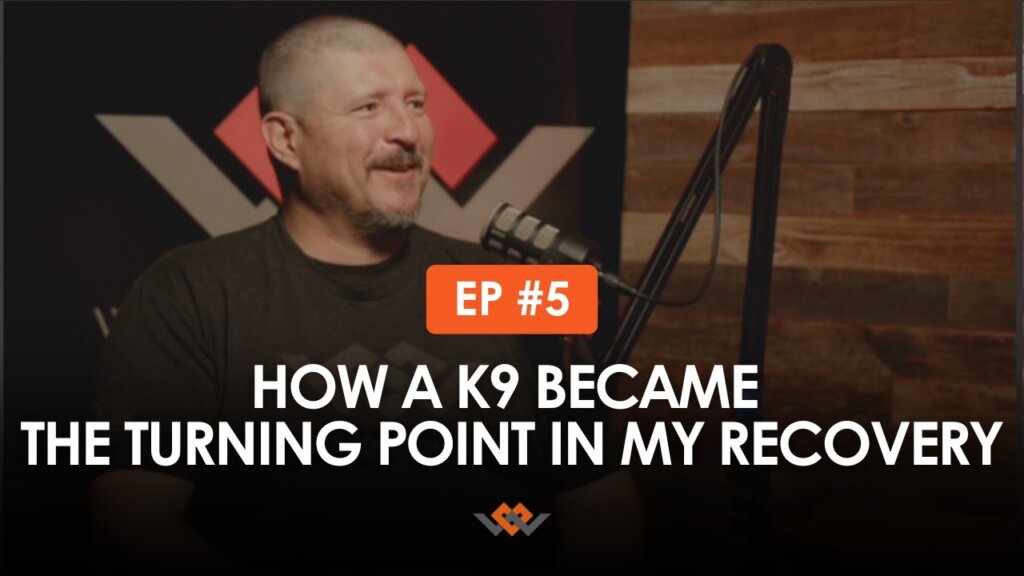
How a K9 Became the Turning Point in My Recovery
Summary
Former Denver police officer Chris tells host Robert Greer how off-duty drinking, panic attacks and a DUI led him to Warriors Heart, where police officer K9 recovery gave him a reason to fight for himself. Today he’s a Warriors Heart alumnus and K9 trainer, married with a family and a home of his own, and his advice to the person he used to be is simple: pick up the phone sooner. Chris’s path shows how police officer K9 recovery can turn a working dog into a reason to fight for yourself.
Key Takeaways
- Chris grew up in a family of Denver police officers and served in the same vice and narcotics unit as his father.
- His drinking was never on duty. It grew when the uniform came off and after panic attacks began.
- A DUI and 10 days in jail started him toward recovery.
- Advocating for himself to train a service dog named Hood became his turning point in treatment.
- He returned to Warriors Heart in kennel care and was promoted to K9 trainer around three and a half years into his sobriety.
Why did Chris become a Denver police officer?
Chris grew up in a family of police officers. His father, grandfather and great uncle all wore a Denver badge, and from the time he was a kid, that’s all he wanted to do. The road there wasn’t straight. He went to Army basic training, but a ligament problem in his foot led to a discharge about 11 weeks in. He went through a college police academy, worked his first law enforcement job in Grand County, Colorado, and eventually was hired by the Denver Police Department.
That moment meant the world to him. His badge number came out to just one digit off from his father’s, 30 years later, and he says it still gives him chills. Being a cop finally gave him and his dad a shared language. Chris went on to work in vice and narcotics, the same unit where his father had served.
Over time, the job stopped being fun. Chris describes political pressure from above and a feeling that he could never step out of line without being done. He’s clear that his problem was never on duty. It was when the uniform came off. Drinking was part of almost every police get-together, usually at a hole-in-the-wall bar where officers could be among their own, and it slowly got worse.
How did drinking take hold for Chris?
During a brutal summer full of shootings and stabbings, Chris had his first panic attack while standing in line at a gas station. His chest felt like it imploded. He made it to his patrol car, hit his emergency button and waited for help, thinking he was having a heart problem. After that, he says, alcohol was the thing that worked best to quiet the anxiety, and he felt constantly under pressure.
He went to a civilian treatment program, but it didn’t stick. He hid his drinking. Then one night, realizing he was too drunk to be on the road, he pulled into a neighborhood and fell asleep in his car. He was arrested for a DUI and spent 10 days in jail. Having been the one who put people in jail, he found it deeply humbling. Today he sees that arresting officer differently, as the person who started him toward the greatest gift he would ever receive.
It still wasn’t enough. Chris landed another law enforcement job but was miserable and angry. He moved to his grandfather’s log house in southwest Colorado for a fresh start, but as Robert points out, wherever you go, there you are. When people close to him started facing serious consequences from their own drinking, Chris saw the ground coming up fast and knew he had to pull the ripcord.
A friend told him about Warriors Heart. With no insurance and no VA benefits, he was helped through a foundation scholarship. He refused to go to another civilian rehab, and he wasn’t thrilled when he learned the program used the 12 steps. He agreed once he heard it was built for veterans and first responders.
How did the Warriors Heart K9 program become his turning point?
Chris remembers being so anxious those first days that he could hear every knife hit every plate in the dining hall. Then, standing at a refrigerator, another warrior asked if he liked dogs and told him the K9 program wasn’t just a visit with some puppies. You could actually train and adopt a service dog.
Chris almost didn’t sign up because he felt so insecure. He did, and the K9 staff made him feel at home right away. The first dogs he wanted kept going to other people, and that became his turning point. “I need to advocate for myself,” he realized. When a dog named Hood came in, he walked into the kennel and made it known that this one was his.
Working toward that goal gave him a reason to show up for group, do his step work and give the program a real try. His counselor also helped him tie recovery to things he already understood. He learned to slow down and take it one day at a time instead of trying to absorb everything at once, and to shift from “I have to” to “I get to.” He still carries his coin in his pocket.
What is Chris’s life like in recovery?
After treatment, Chris kept working his program, found sponsors and took Warriors Heart’s lessons home with him. He later returned to sober living, worked at another treatment facility alongside veterans and first responders, and eventually came back to Warriors Heart in kennel care. Around three and a half years into his sobriety, he was promoted to K9 trainer.
Robert recalls a story Chris told at a meeting. A driver backed into him in a parking lot and pinned his legs against his tailgate. Old Chris would have yelled. Instead, what came out was, “Are you okay?” It turned into a kind conversation with a woman who was going through her own hard time.
Today Chris is married, raising a stepson and a baby boy, and he and his wife bought their first home. Looking back, he admits he never imagined any of it. “I just didn’t want to drink anymore. I sold myself way short.” He now sees treatment differently, too: “This isn’t a rehab. This is an investment.”
His advice to the person he used to be is simple: pick up the phone sooner.
In Their Words
- “I need to advocate for myself.” (Chris)
- “I just didn’t want to drink anymore. I sold myself way short.” (Chris)
- “This isn’t a rehab. This is an investment.” (Chris)
FAQ
What is the Warriors Heart K9 program?
It’s a program where warriors in treatment can do more than visit with dogs. They can train and adopt a service dog.
Can a first responder’s drinking be a problem even if it never happens on duty?
Yes. Chris says his problem was never on duty. It was when the uniform came off, and it slowly got worse.
What does Chris do now?
He came back to Warriors Heart in kennel care and was promoted to K9 trainer around three and a half years into his sobriety.
About the Guest and Host
Chris is a former Denver police officer, a Warriors Heart alumnus and a K9 trainer at Warriors Heart.
Robert Greer is a retired law enforcement officer, a Warriors Heart alumnus, Director of Business Development for Warriors Heart in Texas and the host of the Warriors Heart Podcast.
Hear the full conversation on YouTube
If you or someone you love is an active-duty military member, veteran or first responder struggling with addiction and the invisible wounds of service like PTSD, moral injury and grief, Warriors Heart is here. Call 855-610-1003 to speak to one of our admissions advocates who can help.
Start Recovery Now
Whether you’re seeking help for alcohol or drug dependence, trauma symptoms, or both, confidential 24/7 support is here.
Relevant categories
TREATMENT
COMPANY
SUPPORT
756 Purple Sage Road
Bandera, Texas 78003
20500 Warriors Way
Milford, VA 22514
© Warriors Heart 2026. All rights reserved.