


How Addiction Stole a Mother, And Recovery Brought Her Home
Summary
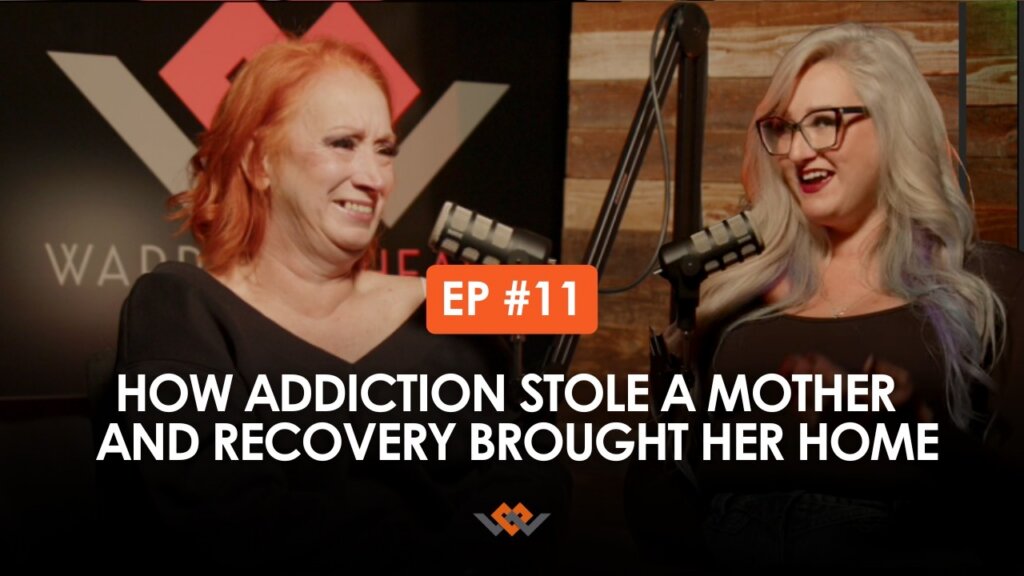
In this Mother’s Day episode, host Robert Greer talks with Jodie, a Navy veteran and Warriors Heart alumna, and then with her daughter, Cheyanne, about addiction and recovery from both sides of a mother-daughter relationship. Jodie shares how pain pills and meth cost her her children, and Cheyanne shares 13 years of silence, the boundaries she set and the grace at the heart of mother daughter addiction recovery that brought them back together. Together they tell a mother daughter addiction recovery story that holds both the harm and the grace of coming back.
Key Takeaways
- Jodie served as a Navy corpsman with the Marines before a medical discharge, and pain pills after surgery led to meth.
- Within about four months of starting meth, her children were in foster care.
- She fought to get into treatment at Warriors Heart, and she says the hard part was learning how to be a human again.
- Cheyanne set firm boundaries when they reconnected, and Jodie respected them.
- Today Jodie has a key to Cheyanne’s house and picks the grandkids up from school.
How did Jodie’s addiction begin?
Jodie served as a Navy corpsman with the Marines, at Camp Pendleton and in Yuma. She loved active duty. She loved the discipline, the ambulance duty and knowing exactly what was expected of her every day. To serve, she had left her two young children with her mother. After just under two years, a serious medical diagnosis led to her discharge, and she was angry about having to leave a life she loved.
After surgery, she was prescribed pain pills, and for the first time in her life she felt an altered state she absolutely loved. That, she says, was the beginning of her downfall. A few years later, while working nights at a hospital and going to school, a coworker offered her meth. Jodie thought she was too educated and too old to become addicted. She was hooked from the first time.
Within about four months, her children were in foster care. She lost her home and cycled through motels, the streets, jail and prison. Before meth, she says, she had been shy and terrified of everyone. Meth gave her a sense of power, and she used it to control and bully people. It took a lot of therapy before she could look in the mirror and admit she had become what she hated most.
How did Jodie get to Warriors Heart?
When Jodie finally wanted help, getting it was its own battle. Because of her health, program after program turned her down. She refused to quit. She went to a congressman’s office, worked with the VA and her doctor to arrange her care, and was finally cleared to come to Warriors Heart. She still keeps a screenshot of the message telling her she’d been accepted. When she saw it, she started crying in front of people who had never seen her cry.
Her trip to Texas is already a bit of a legend around Warriors Heart. It involved a wrecked car, an eight-hour drive that took five days and a U-Haul she had no business driving, which Warriors Heart later helped her return. Robert’s point is that once Jodie decided to save her life, nothing was going to stop her.
Once she arrived, she says, staying sober came more easily than she expected. The hard part was learning how to be a human again. She stayed in the area for a long time afterward, going to AA four or five times a week and slowly becoming someone people wanted to be around. Through it all, she had to prepare herself for the possibility that she might never get her kids back, and choose sobriety anyway. “It’s a lot of work to heal,” she says, and every tear, fit and struggle along the way was worth it.
Today Jodie has earned an associate degree in addiction counseling, works at a treatment center and hopes to open transitional housing for veterans in Oklahoma. Asked recently what she wants to be remembered for, she answered, “I want to be seen as kind.”
What was it like to grow up with a parent in addiction?
Cheyanne was about eight when her mom’s addiction took hold. She remembers a home that had what it needed physically but not emotionally: money left on the table, a mother who disappeared for days. Then U.S. Marshals came to the house. She and her brother stayed alone for a week before a teacher noticed her unbrushed hair and repeated clothes. They went into foster care.
She talks about feeling like she had to be perfect to be good enough to be wanted, about fighting kids who said she’d turn out just like her mom, and about the painful choice to cut her mother off completely after becoming a mother herself. She also stayed away from drugs and alcohol entirely.
When a family friend kept telling her Jodie was sober, Cheyanne didn’t want to hear it. She’d heard it before. She finally agreed to one hour at a restaurant, half hoping for a fight. She set firm boundaries, including “don’t call me, I’ll call you,” partly expecting her mom to fail. Jodie respected them. That had never happened before. Robert notes it’s exactly what parents in recovery need to do: give their kids the space to take down walls at their own pace.
How did Jodie and Cheyanne rebuild their relationship?
Slowly, trust came back. Cheyanne introduced her mom to her children as a friend, until her nine-year-old noticed they looked alike and were both loud. Today Jodie has a key to the house, picks the grandkids up from school and has a nickname they gave her. Sometimes, Cheyanne says, her mom cries while brushing their hair or reading a Dr. Seuss book, thinking of the years she missed.
When people in town told the kids about Jodie’s past, Cheyanne explained that it was true, and that “the things we do in the past don’t get to dictate who we become later.” She says the biggest lesson she’s learned through all of it is grace. Now, when someone asks why she’s with Jodie, her answer is simple: that’s my mom, and she’s proud of her.
In Their Words
- “It’s a lot of work to heal.” (Jodie)
- “I want to be seen as kind.” (Jodie)
- “The things we do in the past don’t get to dictate who we become later.” (Cheyanne)
FAQ
How can a parent in recovery rebuild trust with their children?
Jodie respected the boundaries Cheyanne set, including waiting for her to call. Robert says that’s exactly what parents in recovery need to do: give their kids space to take down walls at their own pace.
What does Jodie do today?
She has earned an associate degree in addiction counseling, works at a treatment center and hopes to open transitional housing for veterans in Oklahoma.
What is the biggest lesson Cheyanne learned?
Grace.
About the Guest and Host
Jodie is a Navy veteran, former corpsman and Warriors Heart alumna who now works at a treatment center. Cheyanne is her daughter.
Robert Greer is a retired law enforcement officer, a Warriors Heart alumnus, Director of Business Development for Warriors Heart in Texas and the host of the Warriors Heart Podcast.
Hear the full conversation on YouTube | Apple Podcasts
If you or someone you love is an active-duty military member, veteran or first responder struggling with addiction and the invisible wounds of service like PTSD, moral injury and grief, Warriors Heart is here. Call 855-610-1003 to speak to one of our admissions advocates who can help.
Start Recovery Now
Whether you’re seeking help for alcohol or drug dependence, trauma symptoms, or both, confidential 24/7 support is here.
Relevant categories
TREATMENT
COMPANY
SUPPORT
756 Purple Sage Road
Bandera, Texas 78003
20500 Warriors Way
Milford, VA 22514
© Warriors Heart 2026. All rights reserved.