


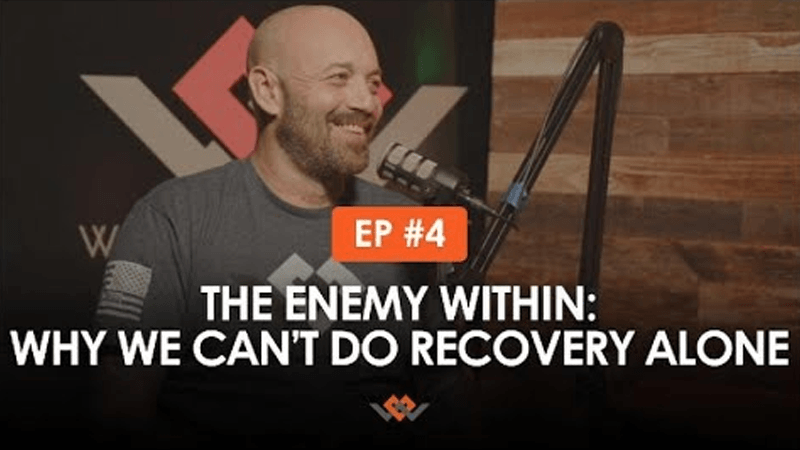
The Enemy Within Why We Can’t Do Recovery Alone
Summary
Green Beret combat veteran Shane St John, a Warriors Heart alumnus who now leads its alumni program, joins host Robert Greer to talk about isolation and the “enemy within” that convinces warriors they have to fight addiction alone. They cover coming back after a relapse without shame, practical tools for staying connected and why vulnerability takes real courage. Shane’s message centers on Green Beret PTSD recovery and why no one has to fight the enemy within alone.
Key Takeaways
- Shane says ego and shame kept him from asking for help before he came to Warriors Heart.
- In the military and in law enforcement, no one goes into a fight alone, yet many warriors try to fight addiction by themselves.
- Warriors who relapse are welcomed back. As long as they’re willing to keep fighting, they hear “welcome home” every time.
- Phone calls, meetings, sponsors and Warriors Anonymous groups help warriors stay connected.
- Shane now sees vulnerability as growth and courage, not weakness.
Why is it so hard for warriors to ask for help?
Recorded in the gray stretch of winter after the holidays, when families have gone home and a lot of people feel the loneliest, this conversation goes straight at isolation. Shane admits that before he came to Warriors Heart, he couldn’t ask for help. Some of it was shame about admitting he was an alcoholic and using drugs. But mostly, he says, it was ego. He kept telling himself he had it handled, that he’d cut down to three beers at dinner, then two, then one.
Robert, a retired law enforcement officer, recognizes that mindset. In the academy, he was taught there’s no such thing as a lone wolf. If you’re in trouble on the street, you call for backup and the cavalry comes running. Shane says the military is the same. You always had a battle buddy, in training and in combat. Yet once they were out, both men tried to handle the hardest fight of their lives alone. For Shane, it didn’t help that he struggled to relate to civilians and didn’t have his team around him anymore.
The two talk about why this enemy is so dangerous. In combat or on patrol, you can see who you’re dealing with. Addiction and the struggles that come with it are invisible, and they know every one of your weak spots. Shane calls it “the enemy within.” As he puts it, you can’t battle an enemy inside your own head by yourself and expect to win.
How can warriors come back after a relapse?
One lesson Robert took from his time at Warriors Heart is that isolation leads to depression, which leads to despair. Both men admit it can still sneak up on them, even years into recovery. Shane, who is a little over three years into his journey, says that when he’s alone too long, his mind still tries to tell him he’s not worthy. When he’s around positive people in the program, he hears positive things.
As alumni director, Shane hears from warriors who have relapsed, and the most common feeling is defeat. They’re ashamed, they think they’ve let everyone down, and they worry Warriors Heart won’t want them back. His answer is always the same. “I don’t care if you’ve been through here nine times, man,” he says. As long as you’re willing to keep fighting, you’ll hear “welcome home” every time you walk back in.
Robert agrees. He didn’t win every fight as a deputy, and no one wins every fight in recovery. What matters is getting back up. He shares that he’s had slips of his own and has known real loneliness, and that what counts most is still being here.
What tools help warriors stay connected in recovery?
The conversation turns practical. Robert compares treatment to the police academy. After the academy comes field training: your sponsor is your field training officer, meetings are the range where you sharpen your skills, and the Big Book is your training manual. Skip those and you’re likely to fail. Your new team, they agree, is the group of people walking this road with you.
Some of the tools they recommend:
Phone therapy. Pick up the phone and call someone in recovery. Sometimes they’ll help you. Sometimes they’ll need your help instead, and serving someone else is what pulls you out of your own funk.
Meetings. Shane says he can feel the difference when he misses meetings for a couple of weeks. When he travels, he listens to recorded talks and reads the Big Book to recharge.
Warriors Anonymous. WA meetings are built for veterans, police officers, firefighters, EMTs, corrections officers, trauma nurses and doctors, and anyone else who has served on the front lines. Shane says alumni in Virginia stood up several new groups in a single year, and many of the people attending aren’t alumni at all, just local warriors looking for a meeting. If there isn’t one in your area, the alumni team can help you start one.
Robert adds a hard truth he heard often in admissions from people who relapsed: they had stopped working with a sponsor, stopped going to meetings and stopped serving others. “The one place that you can go where you won’t take a drink is one place that you won’t go,” he says.
Why does vulnerability take courage?
Shane is honest that he didn’t want to sit down and talk about his feelings for this podcast. He once believed asking for help was weakness. As a Green Beret, he thought he should be able to figure it out himself. His mindset changed only after he reached a crisis point that nearly cost him his life. He turned it over to God, and the Green Beret Foundation connected him with Warriors Heart.
Now he sees vulnerability differently. Being willing to share how he truly feels, not what he thinks people want to hear, is growth. Courage, he says, is doing the thing that scares you to death anyway. Robert agrees that facing what’s going on inside and coming out the other side is the toughest fight there is.
Shane’s closing message to anyone struggling, alumni or not: “It doesn’t mean you’re broken. It doesn’t mean you can’t be fixed.” It just means you lost your way, and you can find it again. You served, and you deserve a happy life.
In Their Words
- “I don’t care if you’ve been through here nine times, man.” (Shane)
- “The one place that you can go where you won’t take a drink is one place that you won’t go.” (Robert)
- “It doesn’t mean you’re broken. It doesn’t mean you can’t be fixed.” (Shane)
FAQ
Can someone come back to Warriors Heart after a relapse?
Shane says yes. As long as a warrior is willing to keep fighting, they’ll hear “welcome home” every time they walk back in.
What is Warriors Anonymous?
Warriors Anonymous (WA) meetings are built for veterans, police officers, firefighters, EMTs, corrections officers, trauma nurses and doctors, and anyone else who has served on the front lines. If there isn’t a meeting nearby, the Warriors Heart alumni team can help start one.
How did Shane St John find Warriors Heart?
After a crisis point that nearly cost him his life, he turned it over to God, and the Green Beret Foundation connected him with Warriors Heart.
About the Guest and Host
Shane St John is a Green Beret combat veteran and Warriors Heart alumnus who leads the Warriors Heart alumni program.
Robert Greer is a retired law enforcement officer, a Warriors Heart alumnus, Director of Business Development for Warriors Heart in Texas and the host of the Warriors Heart Podcast.
Hear the full conversation on YouTube | Spotify | Apple Podcasts
If you or someone you love is an active-duty military member, veteran or first responder struggling with addiction and the invisible wounds of service like PTSD, moral injury and grief, Warriors Heart is here. Call 855-610-1003 to speak to one of our admissions advocates who can help.
Start Recovery Now
Whether you’re seeking help for alcohol or drug dependence, trauma symptoms, or both, confidential 24/7 support is here.
Relevant categories
TREATMENT
COMPANY
SUPPORT
756 Purple Sage Road
Bandera, Texas 78003
20500 Warriors Way
Milford, VA 22514
© Warriors Heart 2026. All rights reserved.