


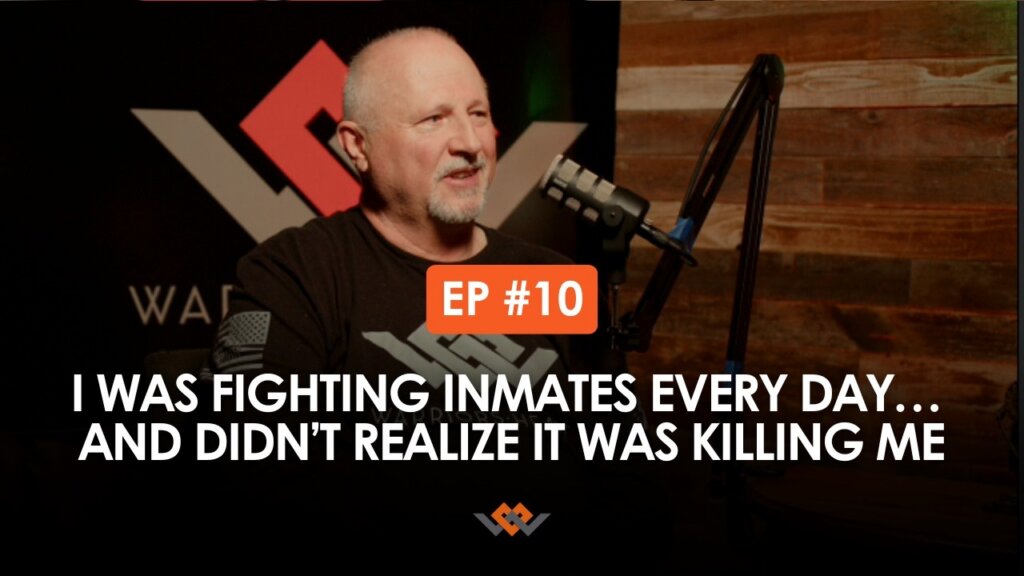
I Was Fighting Inmates Every Day… and Didn’t Realize It Was Killing Me
Summary
Retired Nevada corrections officer Greg H. tells host Robert Greer how years on a prison tactical team, averaging about four altercations with inmates a day, slowly changed him without his noticing. He talks about the health warning that led to his early retirement, the food dependency he developed and why corrections officer PTSD recovery still has to fight the feeling that COs haven’t earned help. Greg H. makes the case for corrections officer PTSD recovery when the job’s daily violence follows you home.
Key Takeaways
- Greg spent just under 14 years with the Nevada Department of Corrections, much of it on the high-risk side of the job.
- Counting his use-of-force reports showed an average of about four altercations with inmates a day.
- The job hardened him, contributed to his divorce and brought a doctor’s warning that something had to give.
- His dependency was food, not alcohol or drugs, and Robert notes addiction comes in many forms.
- Many corrections officers don’t see themselves as “real” cops, so they don’t feel they’ve earned the right to struggle.
What is it like to work inside a maximum-security prison?
Greg spent just under 14 years with the Nevada Department of Corrections. After his first year, he joined the institution’s search and escort team, which later evolved into what’s now called CERT, a tactical team that handles cell shakedowns, transports and potential riots. For most of his career, he worked the high-risk side of the job, including a maximum-security lockdown unit that housed inmates in disciplinary segregation and protective custody. Shifts sometimes stretched to 16 hours.
He trained new officers, too, and he always told them the same thing: on your best day, you’re outnumbered something like 150 to one. Robert, who started his own law enforcement career working in a jail before becoming a detective, knows that math. Both men talk about learning to read a room, feeling trouble coming before it starts, and the strange reality of running into people you dealt with on the job while you’re out at the mall with your family.
Greg shares one story that shows just how dangerous the work could be. After he stopped an inmate armed with a homemade knife from attacking another inmate, the confrontation ended with the attacker going over a second-floor railing. A gang inside the prison later put a contract out on Greg’s life. He tells how he defused it himself by walking onto the yard and talking face to face with one of the group’s leaders, who knew Greg’s reputation for being fair, firm and consistent. Greg explains that he treated inmates like human beings while holding the line, and that respect is what got him through.
How did corrections work change Greg?
Looking back, Greg says the job was slowly changing him. He built walls and a hard exterior to keep things at bay. He started seeing everyone in public as either an ex-felon or a future one. His attitude contributed to his divorce. And one intake moment stuck with him: a 16-year-old boy coming into the lockdown unit after a violent crime. Greg looked into his eyes and thought, I don’t know if I can do this anymore.
His body was keeping score, too. He’d been having anxiety, and a physical and stress test in his late 30s came with a blunt warning from a doctor that something had to give. When he added up those use-of-force forms, he decided the odds were about to catch up with him. He filed for early retirement.
Greg is honest that he also developed a dependency of his own. He didn’t turn to alcohol or drugs. He turned to food, eating to shut off the world, and his weight went up and down for years. Robert points out that addiction comes in many forms, and that what matters is facing it.
Greg went on to reinvent himself several times. He’s practiced martial arts for 50 years and spent years running nightclub security alongside Josh Lannon, now Warriors Heart’s Founder and CEO, who has been like a brother to him. Today he works in technology. He even built the dashboard system Warriors Heart uses to track admissions.
Why don’t more corrections officers ask for help?
Greg’s healing didn’t start until years after he left corrections, and he credits Warriors Heart founders Josh and Lisa Lannon for helping him see what he had been carrying. A turning point came while visiting the Warriors Heart Virginia campus, where Josh suggested he sit in on a group. Greg didn’t think his stories compared to those of the combat veterans in the room. But when he finally shared one, the reaction made him realize he was carrying more trauma than he’d ever admitted.
Robert felt the same way when he came to Warriors Heart, believing he was “just a cop” next to Marines and SEALs. Their feedback was what validated his own pain. Everyone’s experiences are unique, he says, and the person someone compares themselves to might look at what you went through and want no part of it.
That mindset, Greg believes, is a big reason so few corrections officers seek help. Many see themselves as a subset of law enforcement, not “real” cops, so they don’t feel they’ve earned the right to struggle. Robert agrees and points out that without corrections staff, the rest of the system can’t do its job. As Greg puts it, warriors convince themselves they can handle anything: “You don’t even see you need help, brother.”
Why does every person’s work matter?
The conversation closes on purpose. Greg admits his default is to downplay his contributions and avoid anything that might bring negative feedback, including this podcast. He nearly talked himself out of it. Robert reminds him that what he does matters, even when he can’t see the ripples. Robert shares that after his own career ended, he took a job delivering auto parts and felt it had no purpose, until his brother pointed out that the starter he was dropping off might be the part that gets a patrol car back on the road. Everything a person does matters to someone. Greg says he wants the people around him to keep holding him to his best, the way Josh always has.
His description of what years on the job can do to someone will ring true for a lot of officers: “Although your shiny outside doesn’t look dented, your inside’s just beat all the heck.”
In Their Words
- “You don’t even see you need help, brother.” (Greg)
- “Fair, firm, consistent. I do my officer thing. You do your inmate thing.” (Greg)
- “Although your shiny outside doesn’t look dented, your inside’s just beat all the heck.” (Greg)
FAQ
Do corrections officers experience trauma like other first responders?
Yes. Greg averaged about four altercations a day and was outnumbered something like 150 to one on his best day. He and Robert agree corrections officers belong in the conversation about first responder trauma.
Does addiction always involve alcohol or drugs?
No. Greg’s dependency was food, and Robert points out that addiction comes in many forms.
Is Greg H. a Warriors Heart client?
No. He’s a longtime friend of the founders who built the dashboard system Warriors Heart uses to track admissions.
About the Guest and Host
Greg H. is a retired Nevada corrections officer, longtime martial artist and technology professional who built the dashboard Warriors Heart uses to track admissions.
Robert Greer is a retired law enforcement officer, a Warriors Heart alumnus, Director of Business Development for Warriors Heart in Texas and the host of the Warriors Heart Podcast.
Hear the full conversation on YouTube | Apple Podcasts
If you or someone you love is an active-duty military member, veteran or first responder struggling with addiction and the invisible wounds of service like PTSD, moral injury and grief, Warriors Heart is here. Call 855-610-1003 to speak to one of our admissions advocates who can help.
Start Recovery Now
Whether you’re seeking help for alcohol or drug dependence, trauma symptoms, or both, confidential 24/7 support is here.
Relevant categories
TREATMENT
COMPANY
SUPPORT
756 Purple Sage Road
Bandera, Texas 78003
20500 Warriors Way
Milford, VA 22514
© Warriors Heart 2026. All rights reserved.