


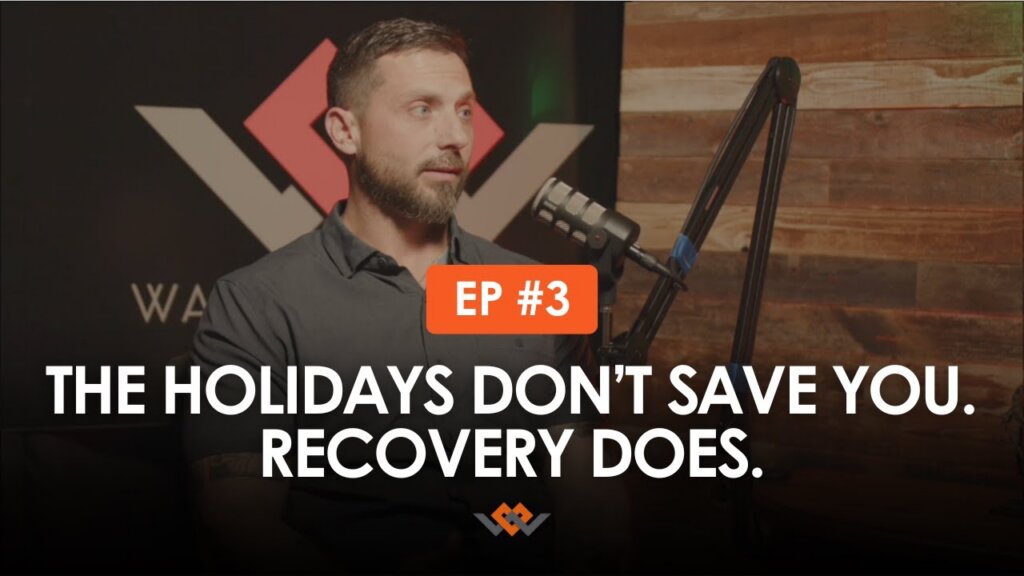
The Holidays Don’t Save You. Recovery Does.
Summary
Marine Corps veteran Michael O’Dell, Warriors Heart’s COO of Shared Services, tells host Robert Greer why the holidays never fixed his addiction. He shares how drinking took hold when he was a teenager, how his life spiraled after the Marines, and how he found peace and a new purpose while serving a prison sentence. His message: holidays don’t change people, people change holidays. It is a blunt look at Marine veteran holiday recovery when addiction, depression, and trauma are in the house.
Key Takeaways
- Michael had his first beer at about 14 or 15 and had been arrested around ten times before he joined the Marine Corps at 19.
- His only sober Christmases in years came on deployment, and that sobriety was forced.
- After a relapse, he believed he was unfixable, until he worked the 12 steps while serving a prison sentence.
- He has worked at Warriors Heart since 2018, and his children have never seen him intoxicated or high.
- Waiting until after the holidays to get help means accepting that things won’t get better in the meantime.
How did Michael O’Dell’s drinking start?
Michael remembers his first beer, at about 14 or 15. His buddy hated it. Michael loved it. At a time when he was struggling with depression, anger and a feeling of isolation, alcohol changed the way he felt about himself, and he couldn’t wait for the next chance to feel that way again.
The consequences came early. He was arrested for the first time at 15, and by the time he joined the Marine Corps at 19, he had been arrested around ten times for substance-related offenses. His mother, he says, would lie awake waiting for a call from the sheriff’s department telling her he was either in jail or dead. When he left for the Marines, it was a relief to her.
Michael is clear that home wasn’t the problem. Christmas at his parents’ house was warm and full of love, with a real tree, gifts and a good meal. The problem was what he was carrying inside. He compares it to oil and water: all that goodness couldn’t mix with the anger, fear and depression he felt. “Like if I hate myself, I cannot let love in,” he explains. So he’d do Christmas with the family and then leave to go do his own thing.
What happened after Michael left the Marine Corps?
Joining the Marine Corps, Michael says, was one of the best decisions of his life. He wanted to be part of something bigger than himself, and some of his best memories are of Christmases spent with his brothers overseas. He served in Fallujah in 2007 and deployed to Ramadi in the 2008 to 2009 timeframe, decorating a tree with empty cigarette packs and tins and stacking care-package boxes underneath so it looked like there were gifts.
Those deployments were also his only sober Christmases in years, and he points out that the sobriety was forced. Away from the structure of a deployment, his drinking was worse than ever. He says the only things he did well in his last couple of years in the Marines were deploying and training. He got out with an honorable discharge in 2010, but he wasn’t allowed to reenlist, and something in him broke.
What followed was a hard spiral. Michael shares a story he still finds painful to tell: an accident he caused while intoxicated, shortly after leaving the Marines. The other driver, whose son had just come home from the Marine Corps and was struggling himself, asked the court to show him mercy. Even that didn’t change his direction. Alcohol stopped working, and he moved heavily into drugs. When his son was born, he truly wanted to change for him. It didn’t last, because, as he and Robert agree, you can’t get sober for somebody else.
He had also tried treatment once, doing every assignment and reading the whole Big Book. He relapsed soon after, and he used that relapse as proof that he was unfixable. Michael doesn’t sugarcoat how dark life got, including times he wanted his life to end.
Where did Michael’s turning point come?
Michael’s turning point came in a county jail cell, facing a long prison sentence for substance-related charges. He prayed, told God he was done, and asked for a shorter sentence, promising that he would serve it with joy. When the judge offered him three years, he says it was the first time he took ownership of the life he’d created with a good attitude. The mission, as he puts it, was to go to prison and get his life together.
Inside, he started remembering what he’d learned in treatment years before. He worked the 12 steps, read his Bible and the Big Book, and began sharing what he’d learned with other inmates, who started coming to him for guidance. Around him there was violence and drugs, but he found something no one could take away. “There’s a peace that surpasses all understanding,” he says, borrowing from the Apostle Paul.
He also learned he wasn’t cured. When his release was suddenly delayed and he missed going home for Christmas, the anger and fear came rushing back. Michael calls it a humility check he needed, because recovery means learning to handle those emotions without turning to a bottle.
Why shouldn’t families wait until after the holidays to get help?
Michael has worked at Warriors Heart since 2018. His children have never seen him intoxicated or high, and he talks about how much a sober Christmas means now. His message is direct: “Holidays don’t change people. People change holidays.” What kids want, he says, is your presence.
For anyone afraid of missing a holiday to get help, he offers another way to see it. When he was locked up, his mother told him she no longer had to pray for his safety, because she finally knew where he was at night. Getting help, whenever it happens, gives your family a kind of peace they may not have felt in years. For loved ones, he adds that waiting until after the holidays means accepting that things won’t get better in the meantime.
He also leaves listeners with this: if you’re hearing this, you’ve made it through every one of the hardest days of your life so far, and you don’t have to face the next one alone.
In Their Words
- “Holidays don’t change people. People change holidays.” (Michael)
- “There’s a peace that surpasses all understanding.” (Michael)
- “Like if I hate myself, I cannot let love in.” (Michael)
FAQ
Can the holidays fix someone’s addiction?
Michael says no: “Holidays don’t change people. People change holidays.” What kids want, he says, is your presence.
What if getting help means missing a holiday?
Michael says getting help, whenever it happens, gives a family a kind of peace they may not have felt in years. When he was locked up, his mother told him she no longer had to pray for his safety because she finally knew where he was at night.
Can someone get sober for their kids?
Michael truly wanted to change when his son was born, but it didn’t last. He and Robert agree that you can’t get sober for somebody else.
About the Guest and Host
Michael O’Dell is a Marine Corps veteran and the COO of Shared Services at Warriors Heart, where he has worked since 2018. This conversation also highlights Marine veteran holiday recovery for warriors who need to hear it.
Robert Greer is a retired law enforcement officer, a Warriors Heart alumnus, Director of Business Development for Warriors Heart in Texas and the host of the Warriors Heart Podcast.
Hear the full conversation on YouTube
If you or someone you love is an active-duty military member, veteran or first responder struggling with addiction and the invisible wounds of service like PTSD, moral injury and grief, Warriors Heart is here. Call 855-610-1003 to speak to one of our admissions advocates who can help.
Start Recovery Now
Whether you’re seeking help for alcohol or drug dependence, trauma symptoms, or both, confidential 24/7 support is here.
Relevant categories
TREATMENT
COMPANY
SUPPORT
756 Purple Sage Road
Bandera, Texas 78003
20500 Warriors Way
Milford, VA 22514
© Warriors Heart 2026. All rights reserved.