


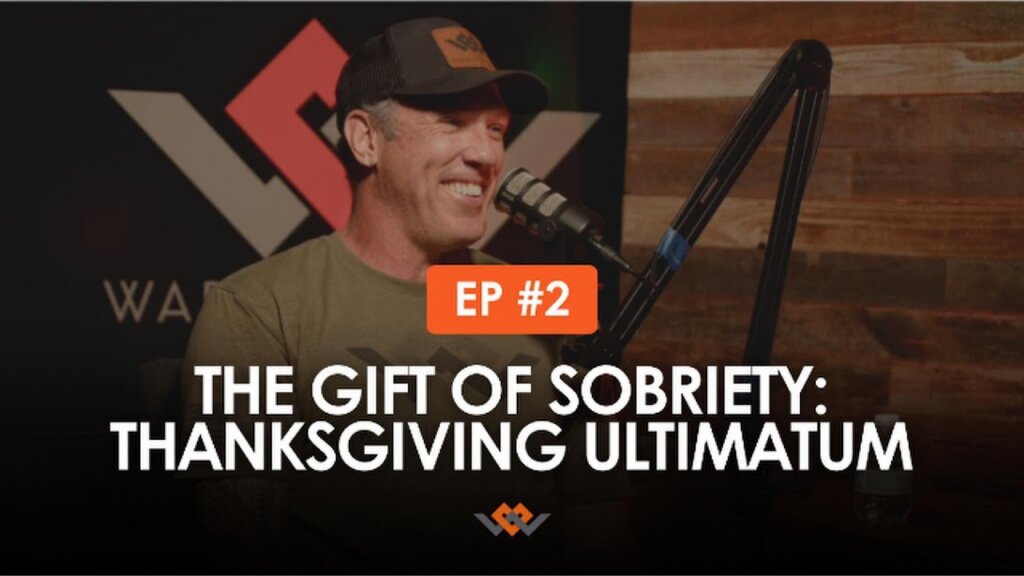
The Gift of Sobriety: Thanksgiving Ultimatum
Summary
Warriors Heart Founder and CEO Josh Lannon, approaching 24 years of sobriety at the time of recording, tells host Robert Greer about the night before Thanksgiving when his wife told him to go to rehab that night or she would divorce him. He explains why having a plan made the difference, which warning signs families can watch for, and why the best gift you can give your family during the holidays is a sober you.
Key Takeaways
- Josh started drinking at 15 and was a binge drinker running a packed Las Vegas nightclub by his mid-20s.
- His wife’s ultimatum worked because she had a plan: a treatment center was lined up, and they drove through the night to get there.
- Holding someone accountable can feel like punishment in the moment, but Josh calls it love.
- Josh spent that Thanksgiving in treatment and calls it a blessing.
- His recovery led him into treatment work and, later, to Warriors Heart, founded by Josh and Lisa Lannon and Tom and Laurie Spooner.
What was Josh Lannon’s life like as a “professional alcoholic”?
Josh started drinking at 15. By his mid-20s he was running a packed country western nightclub in Las Vegas, and his drinking had ramped up with the job. He describes himself as a binge drinker who would go hard, dry out for a couple of days and then go right back at it. His wife was a Las Vegas Metro police officer, which gave the couple a running joke: he’d get people drunk and she’d book them in jail.
From the outside, life looked fine. Middle-class house, middle-class car, a steady routine. Josh calls himself a “professional alcoholic” from that era, but behind closed doors the marriage was falling apart and money was disappearing. What hurt him most was the string of broken promises, many of them made only to himself. He’d swear he wasn’t going to drink like that again, and then he would. If he couldn’t keep his word to himself, he wondered, how could he keep it to his wife, his family or his boss?
He shares a few stories with honesty and humor, including a honeymoon cruise where he kept his promise not to drink but made sure everyone knew he wasn’t happy about it. Underneath the jokes, though, things were getting darker. Josh opens up about how far down he’d gone by the night that changed everything, a moment he describes as being ashamed of himself, with “the shadows” coming for him.
What ultimatum led Josh Lannon to treatment?
When his wife came home that night, Josh could see in her eyes that this time was different. There was no sweet talk and no negotiating. He remembers her words exactly: “Either you go to rehab tonight or I’m going to divorce you.”
What made the difference, Josh and Robert agree, was that she didn’t just make a demand. She had a plan. A treatment center in California was lined up, and the two of them drove through the night to get there. Somewhere along the way, Josh tried to talk her into a stop for a four-pack to take the edge off. She told him that if he got out of the car, she’d drive away. Later, when he called and asked her to come get him before he’d finished the program, she held the line again.
Years later, she told Josh how hard that decision was for her, because she didn’t know whether he’d go. She did it anyway, because she wasn’t going to love him to death. Josh calls that an important distinction for anyone who loves someone in active addiction. Holding someone accountable can feel like punishment in the moment, but it’s love. Robert, who spent time in admissions, adds that families often call wanting to know where to send a loved one before they have that hard conversation, and having a place ready can make all the difference.
Josh also names a few warning signs for families: broken promises, not showing up when you said you would, needing to drink or use to get through the day, disappearing, irritability and pulling away from everyone. His blunt advice: if you’re already wondering whether your loved one has a problem, they probably do.
Why can the holidays be the right time to get help?
The conversation keeps circling back to the holidays. Josh talks about Thanksgivings and family events where he was physically present but not really there, and a sister’s wedding where his drinking turned a celebration into a mess. Robert, a retired law enforcement officer, shares that he spent his own first sober Thanksgiving and Christmas away from family, and that giving up those holidays made the ones that followed so much better.
Josh spent that Thanksgiving in treatment, and he calls it a blessing. The best gift he could give his family, he says, was a sober Josh. He talks about learning the Serenity Prayer, realizing he might be part of the problem, and working his recovery one day at a time, from a 30-day chip to a year and beyond. Within months he left the nightclub business for good after working one last New Year’s on the floor and deciding he couldn’t be part of the problem anymore.
Robert puts it simply for anyone tempted to wait until after the holidays: “The most important thing is that you’re going to be there for the next one.”
How did Josh Lannon’s recovery lead to Warriors Heart?
Part of Josh’s turning point came from an unlikely friendship with the owner of the treatment center where he got sober. When Josh asked him to teach him how to run a treatment center, the man said yes and explained why: “One alcoholic helping another alcoholic.” That mentor later became his sponsor.
Josh and his wife opened their first treatment center in Salt Lake City in 2002 and eventually grew to six facilities in Utah and Arizona before selling the company in 2013. Around that time he met Tom Spooner, and the conversations that followed led to Warriors Heart, founded by Josh and Lisa Lannon and Tom and Laurie Spooner and built to help veterans and first responders by facing addiction head-on while also treating what drives it, with dignity and respect. Josh admits he never joined the military himself, and that this work is his way of giving back to a community he loves.
He closes with an idea he borrows from Buckminster Fuller: a honeybee thinks it’s just gathering nectar, but along the way it’s cross-pollinating flowers. Getting sober wasn’t only about getting his life and family back. It created ripple effects he never could have planned.
In Their Words
- “Either you go to rehab tonight or I’m going to divorce you.” (Josh, recalling his wife’s words)
- “One alcoholic helping another alcoholic.” (Josh, recalling his mentor’s words)
- “The most important thing is that you’re going to be there for the next one.” (Robert)
FAQ
What warning signs of addiction should families watch for?
Josh names broken promises, not showing up when you said you would, needing to drink or use to get through the day, disappearing, irritability and pulling away from everyone. If you’re already wondering whether a loved one has a problem, he says, they probably do.
Should someone wait until after the holidays to get help?
Josh spent his first sober Thanksgiving in treatment and calls it a blessing. Robert’s advice is that the most important thing is being there for the next one.
Who founded Warriors Heart?
Warriors Heart was founded by Josh and Lisa Lannon and Tom and Laurie Spooner. Josh Lannon is the Founder and CEO, and Tom Spooner is the President & Co-Founder.
About the Guest and Host
Josh Lannon is the Founder and CEO of Warriors Heart and was approaching 24 years of sobriety at the time of recording.
Robert Greer is a retired law enforcement officer, a Warriors Heart alumnus, Director of Business Development for Warriors Heart in Texas and the host of the Warriors Heart Podcast.
Hear the full conversation on YouTube
If you or someone you love is an active-duty military member, veteran or first responder struggling with addiction and the invisible wounds of service like PTSD, moral injury and grief, Warriors Heart is here. Call 855-610-1003 to speak to one of our admissions advocates who can help.
Start Recovery Now
Whether you’re seeking help for alcohol or drug dependence, trauma symptoms, or both, confidential 24/7 support is here.
Relevant categories
TREATMENT
COMPANY
SUPPORT
756 Purple Sage Road
Bandera, Texas 78003
20500 Warriors Way
Milford, VA 22514
© Warriors Heart 2026. All rights reserved.