

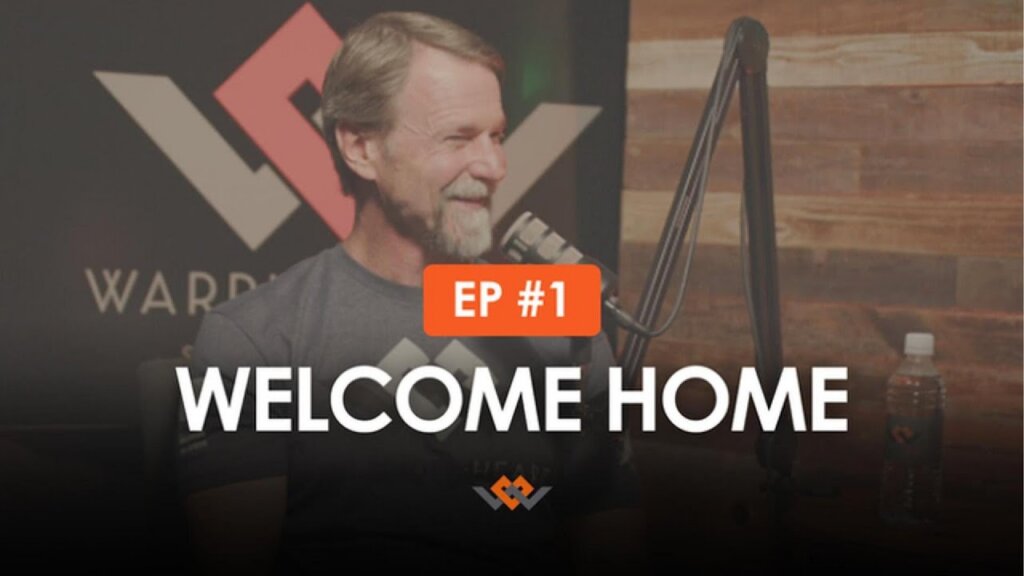
What ‘Welcome Home’ Really Means | with Tom Spooner
Summary
Warriors Heart president and co-founder Tom Spooner shares where the words “Welcome Home” came from and why every warrior hears them on arrival. He and host Robert Greer talk about why so many veterans and first responders are physically home but not really home, what the coin out means, and why peer support is where healing starts.
Key Takeaways
- “Welcome Home” came from the founders’ vision of the ideal home: kindness, love, support, security and stability.
- Many veterans and first responders find family in their service and lose it when that service ends.
- The coin out ceremony has to be earned to mean something.
- Combat veterans and first responders heal together through shared experience.
- Warriors can come back for a recharge after treatment.
Where did “Welcome Home” come from?
Tom takes listeners back to the early planning days of Warriors Heart, before the property had even been chosen. Tom and his wife Laurie Spooner had joined forces with Josh and Lisa Lannon, who had already spent years helping civilians recover from alcohol and drug addiction. Together, the four founders set out to build a treatment program specifically for veterans and first responders.
The group pictured what a warrior would see and feel when they arrived. Tom admits he was a little rough around the edges back then and not used to talking about emotions, the kind of thing he says people in his line of work tend to suppress. But as the room called out words like kindness, love, support, security and stability, Tom realized they were describing the most ideal home.
That idea hit hard. So many veterans and first responders, he explains, are physically home, but they aren’t really home. He thinks of Vietnam veterans who never got a real welcome when they came back. From that conversation, the decision was made: when a warrior arrives, the first thing they’ll hear is “Welcome Home.” Staff say it to every new arrival, and new team members hear it too once they’re hired.
How do warriors react to hearing “Welcome Home”?
For some warriors, it cuts straight through. Tom describes tears welling up, because the staff truly mean it. Others react the way Tom says he would have before he got sober: with an eye roll and a sense that this isn’t their home and never will be.
Robert knows that second reaction well. When he first arrived at Warriors Heart, he was angry and agitated, and he’d lost so much that “home” felt like a sore spot. After hearing it from person after person, something began to shift. The staff, the clinicians and the other warriors made it feel true, often in small moments like sitting down to lunch together. “Home is where you heal,” Robert says. Before long, he was the one greeting new arrivals with those same words, and he still does.
Tom adds that many people who join the military or become first responders are leaving a home that wasn’t so great. They find family in their service, and when that service ends, they’re left searching for it again. Warriors Heart tries to give them that home back, with structure, rules, trust and acceptance. It’s also a home warriors can return to. Robert describes coming back for a recharge around his one-year sobriety anniversary and feeling a giddy sense of homecoming as he drove through the hills toward the property.
What is a coin out at Warriors Heart?
The coin out is the graduation ceremony at the end of the program. Each warrior in the group holds the challenge coin, which bears the words “With My Last Breath,” and says a word about the person coining out. Tom is clear that it has to be earned. “It’s got to be hard and it’s got to be meaningful for our population or it don’t mean nothing,” he says.
Tom calls the coin out one of the most powerful things that happens on the property, because people early in sobriety usually aren’t used to hearing good things about themselves. Robert’s own coin out came on a day when he was still a little sideways with the world, yet the words his peers gave him now hang on his office wall so he never forgets what they saw in him. To him, the coin is like a key to the house.
How does peer support help veterans and first responders heal?
Tom got sober in the military at age 20, surrounded by other soldiers and by old-timers who had served in World War II, Korea and Vietnam. That common language and shared experience shaped how he sponsored others for decades and how Warriors Heart was designed. He admits he wasn’t sure a mix of combat veterans, firefighters, EMTs and police officers would click, until he saw them together around the fire pit in that first year.
Robert arrived believing he was “just a cop” and didn’t deserve a seat at the table next to combat veterans. Around the fire pit, Navy SEALs, Marines and infantry veterans listened to him talk about his work and told him there was no way they could have done it. That acceptance helped him stop minimizing what he had been through, and that’s when real healing began. “That peer-to-peer is where it opens up and healing starts,” Robert says.
The two also talk about purpose. Many warriors leave their careers feeling their mission is over. Robert, whose law enforcement career ended early, found a new one helping officers across the country find places like Warriors Heart. Tom’s advice is to do the work on yourself and leave the results up to God.
In Their Words
- “Home is where you heal” (Robert)
- “it’s got to be hard and it’s got to be meaningful for our population or it don’t mean nothing” (Tom)
- “That peer-to-peer is where it opens up and healing starts” (Robert)
FAQs
Who founded Warriors Heart?
Warriors Heart was founded by Josh and Lisa Lannon and Tom and Laurie Spooner, who built a treatment program specifically for veterans and first responders.
Can veterans and first responders be in treatment together?
Yes. Tom says the shared experience of service is what makes peer support work across military and first responder backgrounds.
Can warriors come back after treatment?
Yes. Robert came back for a recharge around his one-year sobriety anniversary and describes it as a homecoming.
About the Guest and Host
Tom Spooner is the President & Co-Founder of Warriors Heart.
Robert Greer is a retired law enforcement officer, a Warriors Heart alumnus, Director of Business Development for Warriors Heart in Texas and the host of the Warriors Heart Podcast.
Listen to the Full Conversation
Hear the full conversation on YouTube
If you or someone you love is an active-duty military member, veteran or first responder struggling with addiction and the invisible wounds of service like PTSD, moral injury and grief, Warriors Heart is here. Call 855-610-1003 to speak to one of our admissions advocates who can help.
Start Recovery Now
Whether you’re seeking help for alcohol or drug dependence, trauma symptoms, or both, confidential 24/7 support is here.
Relevant categories
TREATMENT
COMPANY
SUPPORT
756 Purple Sage Road
Bandera, Texas 78003
20500 Warriors Way
Milford, VA 22514
© Warriors Heart 2026. All rights reserved.